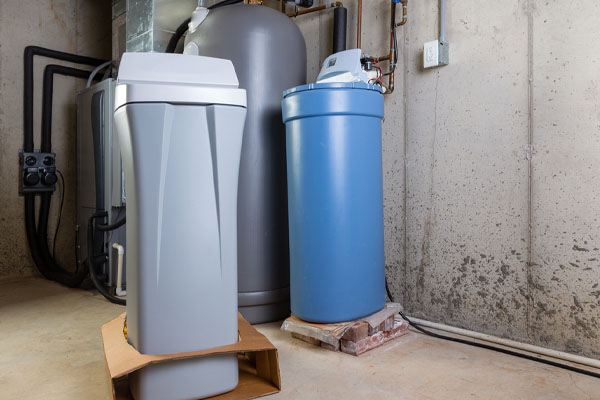
The right water softener depends on your water hardness, household water use, available space, and the specific problems you want to address. Hard water contains elevated levels of calcium and magnesium, which can contribute to scale buildup, soap residue, spotted fixtures, and reduced efficiency in water-using equipment.
Several types of water softening systems are available, and each addresses hard water differently. This article covers the main water softener types, how they work, their advantages and limitations, and the factors to consider when choosing the right option for your home.
What Is a Water Softener and What Does It Do?
A water softener is a whole-house treatment system designed to reduce problems caused by hard water. Traditional systems remove calcium and magnesium before water travels throughout the home’s plumbing. This can limit scale buildup on fixtures and appliances, reduce mineral spots and residue, improve soap and detergent performance, and help protect plumbing equipment from hardness-related deposits.
Water softeners address hard water in different ways. Understanding how the available systems work can help you choose the option that best matches your home’s water conditions and needs.
What Are the Different Types of Water Softeners?

Water softening systems vary in how they address calcium, magnesium, and mineral scale. Some remove hardness minerals directly, while others primarily reduce their tendency to form deposits.
Here are the main types homeowners may encounter.
1. Salt-Based Ion Exchange Water Softeners
Salt-based ion exchange systems are among the most common options for treating hard water. Water passes through a tank containing resin beads that attract calcium and magnesium. These hardness minerals are exchanged for sodium or potassium ions before the treated water continues through the home’s plumbing.
Once the resin becomes saturated with hardness minerals, the system regenerates using a concentrated brine solution. Homeowners must periodically replenish the salt used during this process.
Key Benefits
Salt-based water softeners can:
- Remove calcium and magnesium from hard water
- Reduce scale accumulation in pipes and fixtures
- Minimize mineral spotting on dishes and surfaces
- Improve soap and detergent performance
- Help protect water-using appliances from scale
These systems require sufficient installation space, suitable drainage, regular salt replenishment, and water for regeneration. They are generally well suited for homes with moderate to very hard water where actual hardness removal is the primary goal.
2. Salt-Free Water Softeners
Salt-free systems take a different approach to hard water. Rather than removing calcium and magnesium, most systems in this category condition hardness minerals to reduce their tendency to form scale.
Since the minerals remain in the water, salt-free systems do not provide softened water the same way as traditional ion exchange equipment. Their primary purpose is typically scale control.
Key Benefits and Considerations
Salt-free systems may offer:
- No regular salt replenishment
- No traditional brine regeneration
- Lower routine maintenance requirements
- Reduced scale formation in plumbing and equipment
These systems may suit homeowners who mainly want to manage scale and prefer lower maintenance. Consider water hardness and treatment goals before choosing this option.
3. Dual-Tank Water Softeners
Dual-tank water softeners use two mineral tanks instead of one. Depending on the system design, one tank can continue treating water while the other regenerates, helping maintain access to softened water during high-demand periods.
When a Dual-Tank System Makes Sense
These systems may be particularly useful for:
- Larger households
- Homes with substantial daily water consumption
- Properties with frequent periods of peak water demand
- Households that want to minimize interruptions during regeneration
Dual-tank systems provide greater capacity, but they generally require more installation space and a higher initial investment than single-tank systems. Household water demand should justify the additional capacity.
4. Electronic and Magnetic Water Treatment Systems
Electronic and magnetic systems use electronic or magnetic fields intended to influence how dissolved hardness minerals behave as water moves through the plumbing. Their purpose is generally to reduce the tendency of mineral deposits to adhere to surfaces.
These devices do not remove calcium and magnesium from the water, so they should not be considered equivalent to traditional ion exchange softeners.
Important Considerations
Performance can vary based on the treatment technology, water chemistry, flow conditions, installation, and equipment design. Professional water testing can help determine whether this treatment is appropriate for your home’s specific water conditions.
How to Choose the Right Water Softener

No single water softener fits every household. The right choice depends on the severity of your hard water problem, how much water your household uses, and what you expect the system to accomplish.
Consider these important factors when comparing your options:
Water Hardness
Start by determining how hard your water actually is. Water testing measures the concentration of hardness minerals and provides useful information for choosing the appropriate treatment method and system capacity.
Household Water Demand
A water softener must be sized to accommodate regular and peak household water use. Important factors include the number of occupants and bathrooms, typical daily water consumption, simultaneous fixture use, and the number of water-using appliances. An undersized system may regenerate too frequently or struggle to meet demand, while an unnecessarily large system may increase upfront costs.
Maintenance Requirements
Consider the ongoing care required by each system. Salt-based softeners need periodic salt replenishment and regeneration, while other technologies may require different cleaning, servicing, or component replacement.
Installation Space
Traditional systems require room for mineral and brine tanks, while dual-tank configurations need additional space. Salt-based systems also require suitable plumbing and drainage connections for regeneration.
Long-Term Cost
Look beyond the initial purchase price. Installation, salt or other consumables, regeneration water, maintenance, repairs, and eventual equipment replacement can all contribute to total ownership costs.
Choosing a Water Softener for Your Lehigh Valley Home
Water hardness and household needs can vary from one property to another, so selecting equipment based solely on advertised features may result in a poorly matched system. A professional water assessment can establish the home’s hardness level and identify other water-quality concerns that may require attention.
A plumbing professional can then evaluate factors such as household demand, system capacity, available space, existing plumbing, and drainage requirements. Proper selection and installation help ensure the system provides reliable treatment without unnecessary operating or maintenance demands.
FAQs: Water Softener Types

Can a Water Softener Affect Water Pressure?
A correctly sized and installed water softener should allow adequate flow for normal household use. However, restricted resin, clogged components, incorrect sizing, or other system problems can reduce water pressure. A plumber can determine whether the softener or another part of the plumbing system is responsible.
Can You Drink Water From a Water Softener?
Softened water is commonly used throughout the home, including for drinking. Salt-based ion exchange systems add a small amount of sodium or potassium during the softening process, with the amount depending largely on the original water hardness. Households with specific dietary or water-quality requirements should consult an appropriate professional about their drinking water needs.
Where Is a Water Softener Usually Installed?
Water softeners are typically installed near the point where the main water supply enters the home so they can treat water before it reaches most fixtures and appliances. The exact location depends on the plumbing layout, available space, drainage access, and equipment requirements.
How Can I Tell If My Water Softener Is Not Working Properly?
Possible signs include renewed mineral spotting, scale buildup, changes in how soap lathers, unusually high salt consumption, or changes in water quality. A professional inspection can identify whether the system needs maintenance, adjustment, or repair.
Can I Use a Water Softener With a Septic System?
Water softeners can be used in many homes with septic systems, but the regeneration discharge and local requirements should be considered when planning the installation. A plumbing professional can determine an appropriate setup based on the softener, septic system, and applicable regulations.
Conclusion
Choosing among the different water softener types starts with understanding your home’s water conditions and treatment needs. Salt-based systems remove hardness minerals, while salt-free and alternative technologies generally focus more on controlling scale. Household water demand, available space, maintenance requirements, and long-term costs should also guide your decision.
If hard water is causing scale, spotting, or other problems in your home, contact Robinson Plumbing for professional water softener services in Lehigh Valley. Our experienced team can evaluate your needs and help you select an appropriate system for your property.
Call Robinson Plumbing for Superior Plumbing Services in Lehigh Valley
Robinson Plumbing provides dependable residential plumbing services throughout the Lehigh Valley. Our experienced plumbers handle everything from routine plumbing repairs and maintenance to more complex installations and replacements. Whether you are dealing with a clogged drain, leaking pipe, toilet problem, water heater issue, or another plumbing concern, our team is ready to provide an effective solution.
We are committed to quality workmanship, responsive service, and solutions tailored to the needs of your home. Our team also provides emergency plumbing services when unexpected problems require prompt professional attention.
Contact Robinson Plumbing today to schedule plumbing service or request a free estimate. Let our experienced team help keep your home’s plumbing system working safely and reliably.
Call us today at (610) 351-9889 or contact us for any questions that you might have! Click the link to view our service area.
Related Articles: